Intertidal: Filming Seaweed
Before the Coastline Changes
Across three coasts in Norway and Alaska, a short documentary follows the harvesters, chefs and scientists who see in seaweed an answer to how we eat and how we care for the sea.
.jpg)
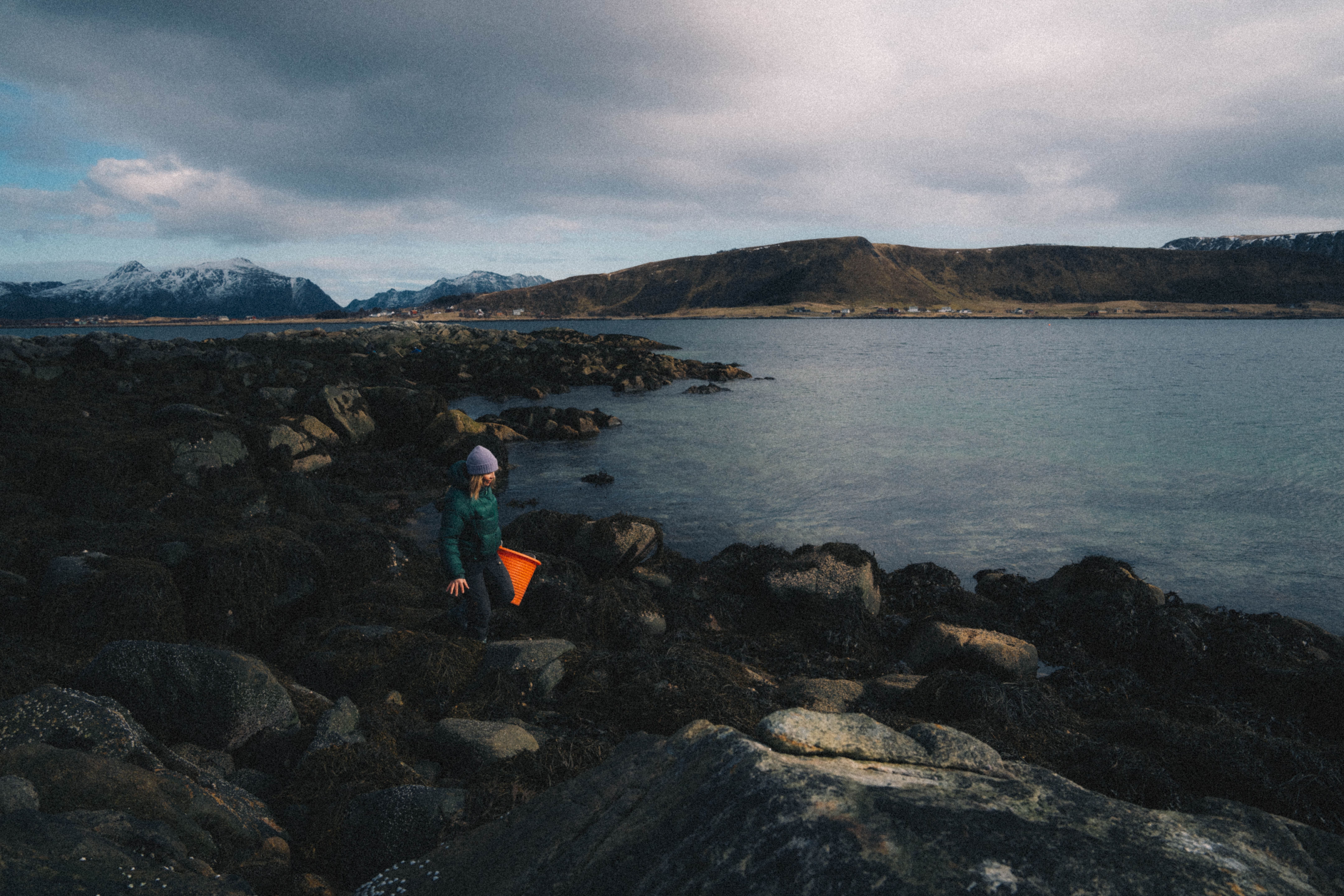
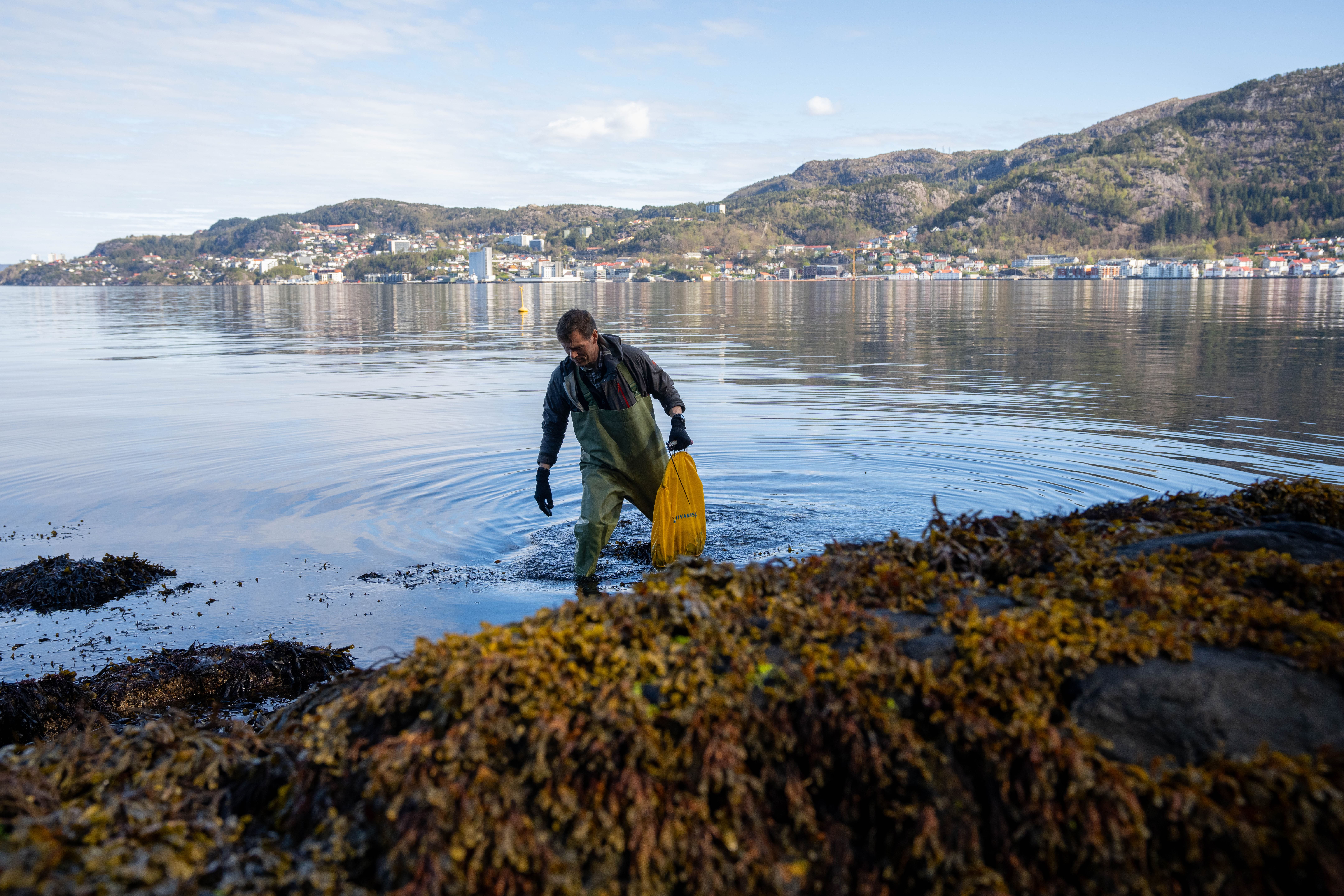
There is a strip of coast that belongs fully to neither the sea nor the land. It appears and disappears with every tide, and in it grows a food as ancient as it is overlooked. From that intertidal zone comes the name of Intertidal, a short documentary that follows this threshold across three points on the map: Lofoten and Bergen in Norway, and Homer in Alaska.
On each coast the same figures reappear, harvesters, chefs and scientists, bound together by the rhythm of the tide and by a movement that reclaims seaweed as something more than an exotic ingredient. The film follows that idea through the people living it: the women of Lofoten Seaweed keeping alive a centuries-old relationship with the sea, a researcher studying its regenerative capacity, chefs bringing it to the plate, and a harvester building the movement from scratch in Alaska. In this conversation, director
Tyler Brower talks about shooting to the rhythm of the tides rather than a schedule, the tension between traditional knowledge and the recent fever around seaweed as superfood and business, and a question the film does not avoid: who benefits, and in what proportion, from an ocean that is starting to be seen as a pantry.
If Intertidal had a single opening sentence, the one line that carries its whole argument before any image appears, what would it be?
Intertidal is an impact film in a short documentary format spanning the coastal communities of Lofoten and Bergen, Norway and Homer, Alaska—Three places united by a shared rhythm of tides and a growing seaweed movement that are all uniquely connected.
Before we go into the tides and the harvests, set the scene for us. What is Intertidal, and what is the journey it takes us on? Introduce us to these three coasts and the harvesters, chefs and scientists who inhabit them, and tell us the thread you found running between them.
Intertidal is named after the intertidal zone—that threshold where ocean meets land, where life ebbs and flows with the tides. It's a fitting metaphor for what the film explores: the places where tradition and innovation meet, where science intersects with lived experience, where an ancient food source is finding new relevance in the face of urgent environmental and culinary questions.
The film takes us across three coasts united by the rhythm of the tide and a shared seaweed movement, though each has found its own way to solve this.
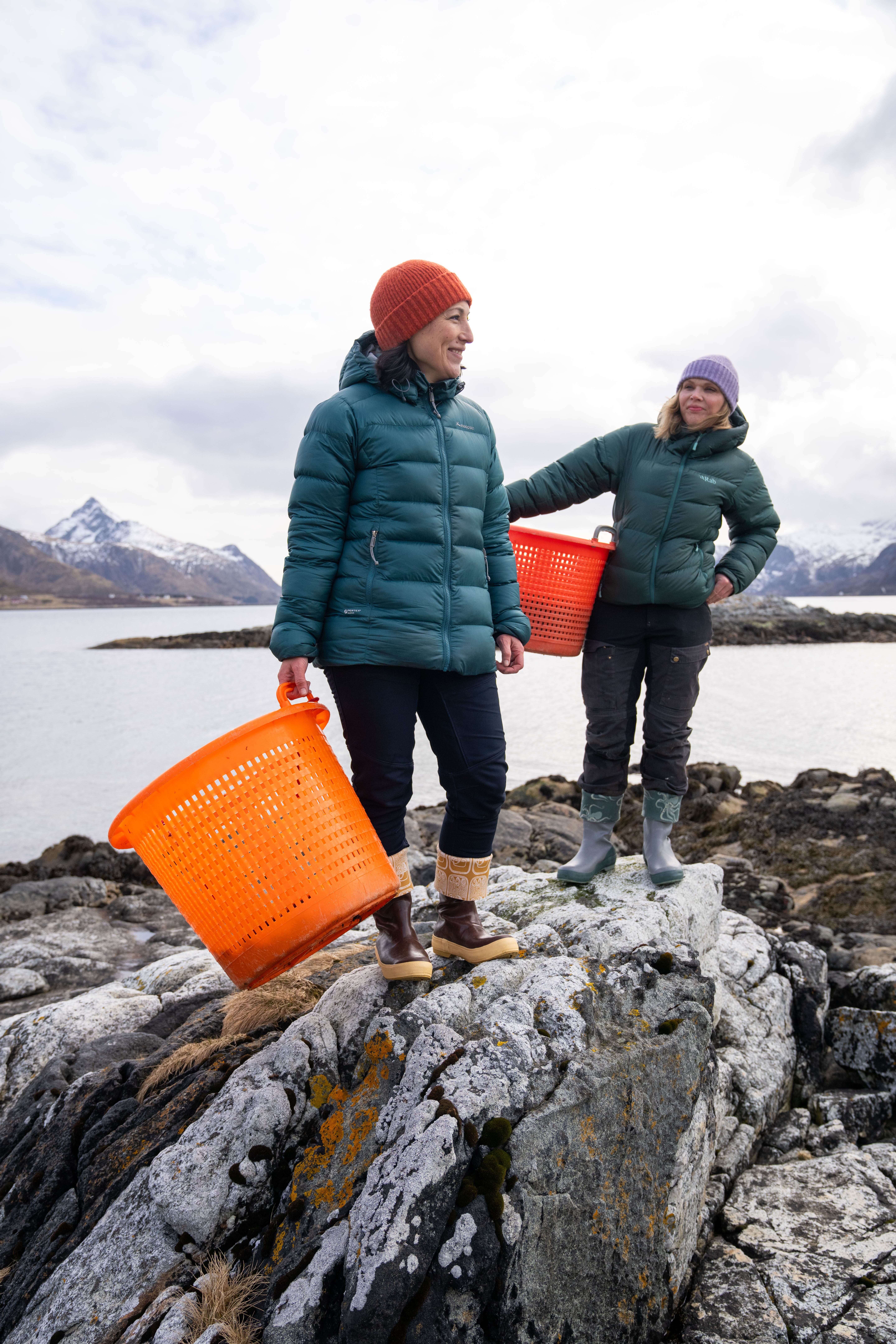
In Lofoten, Norway, we meet Angelita Eriksen and Tamara Singer of Lofoten Seaweed—harvesters keeping alive a cultural connection that runs deep in the community's relationship with the sea. At Holmen Restaurant, chef Elijah Holland is translating that harvest into cuisine, bridging the gap between tradition and the plate.
In Bergen, we sit down with Arne Duinker, a PhD and kelp researcher at the Institute of Marine Research, who's studying seaweed's ecological potential and regenerative capacity—the science beneath the story. Nearby, at Floyen Restaurant, chef René Leo Blume and manager Bjarte Finne are working at the intersection of fine dining and sustainability, proving that seaweed isn't a niche ingredient but a culinary frontier.
And in Homer, Alaska, we find Lily Westphal of Kachemak Kelp, building a seaweed harvesting movement from scratch in a place where the practice is still emerging. Chef Cole Pomaikai at Kachemak Bay Wilderness Lodge is doing the same work as Elijah and René—translating the harvest into experience and flavor.
The thread running through all three: each of these communities has recognized that seaweed—humble, regenerative, tied to their ocean heritage—might offer real answers to how we eat, how we steward our coasts, and how we build food systems that don't deplete the world around us. The film follows that realization across three geographies and through the voices of the people living it.
Seaweed lives in most people's imagination as something humble, almost invisible. Your film proposes it as a possible answer to urgent environmental and culinary questions. How did you, as a director, come to look at such a common plant and see something so large in it?
Most people in landlocked states or countries have a dissociation with seaweed—it's either this beautiful water plant or something slimy and foreign. What Intertidal does is reframe it entirely: it shares the beauty and reveals seaweed's remarkable capacity to provide across multiple industries and culinary applications. Beyond food, seaweed is used in pharmaceuticals, bioplastics, fertilizers, cosmetics, and textiles. It's everywhere once you know to look.But there was a specific moment while directing that crystallized everything: we have salt and pepper on nearly every table across the world. Salt typically comes from underground deposits left by ancient dried-up seas or from evaporated seawater. Pepper comes from dried berries native to India. Yet every continent is bordered by ocean—a living garden where we can sustainably harvest seaweed for umami and flavoring. That became the through-line: what if seaweed became as common in home kitchens as salt and pepper? Not just as a commercial substitute, but as a staple people actually reach for. The intertidal zone shows us that's possible.
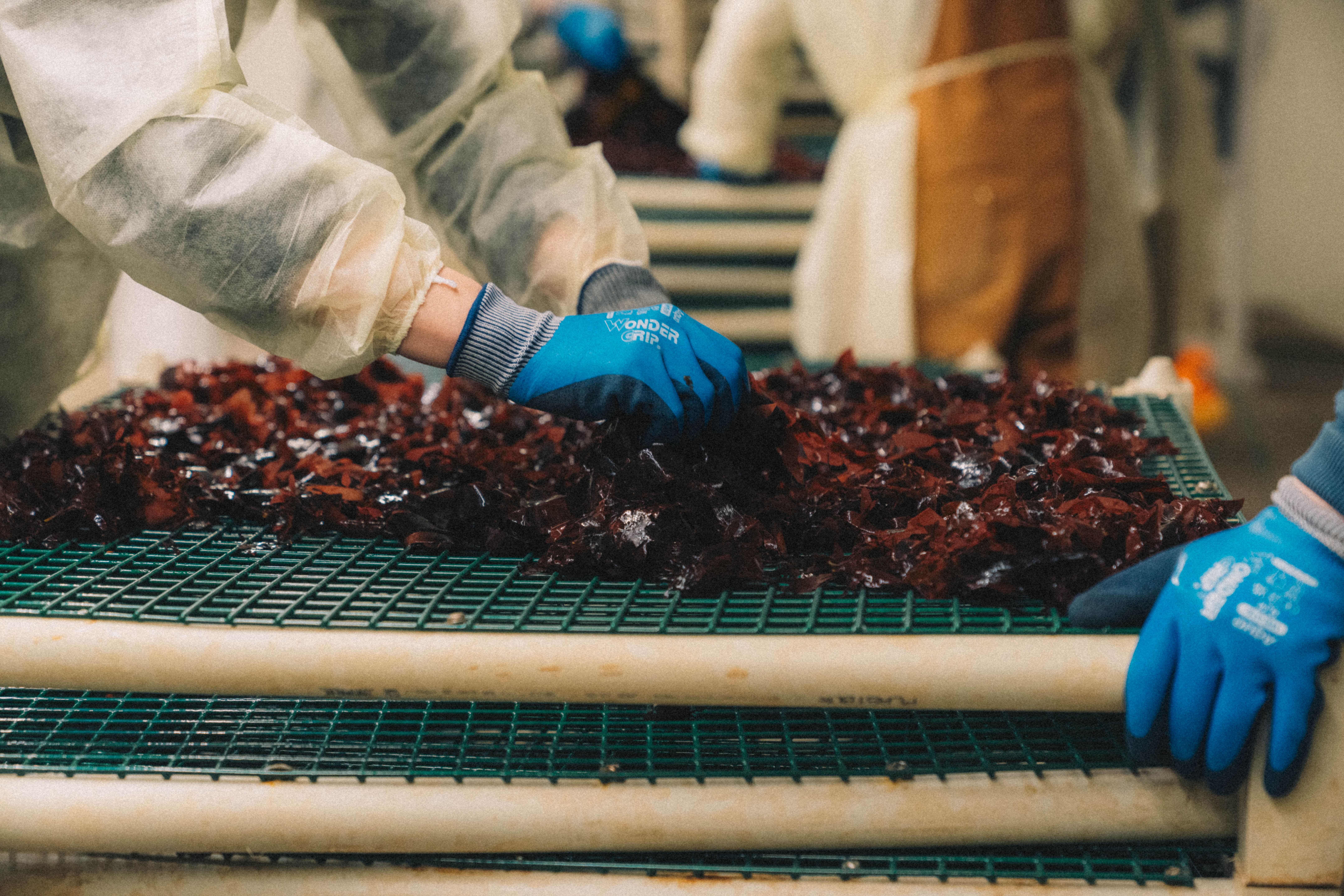
"Intertidal shares seaweed's beauty and reveals its remarkable capacity to provide across multiple industries and culinary applications."
There's something deeply physical about harvesting seaweed: the cold, the timing of the tide, the body in the water waiting on the ocean rather than the other way around. How did you and your crew work to the rhythm of the tides rather than a shooting schedule, and how did you get the camera to carry that, the feeling of the place, and not just the information? What did you want the viewer to feel before they understood anything?
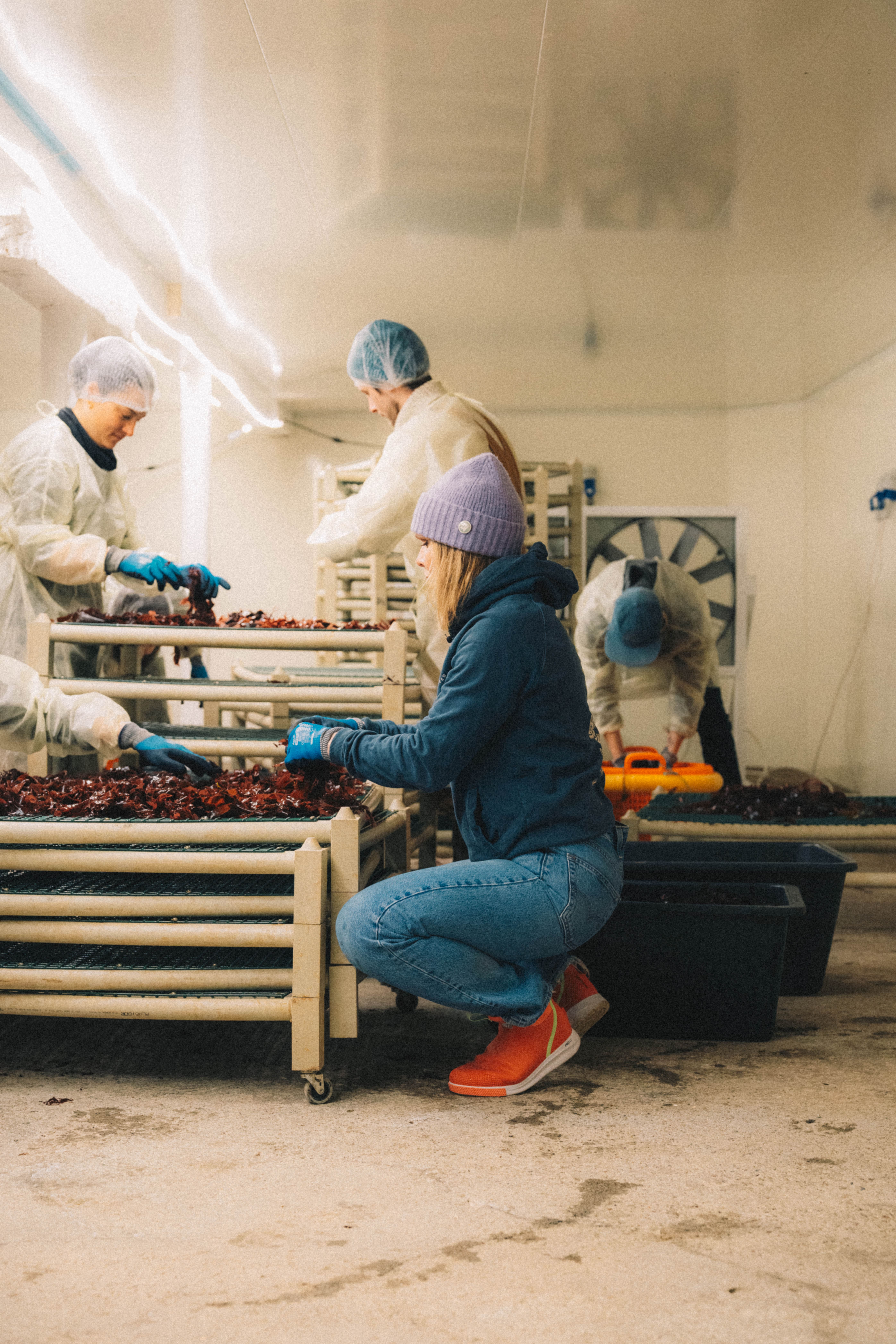
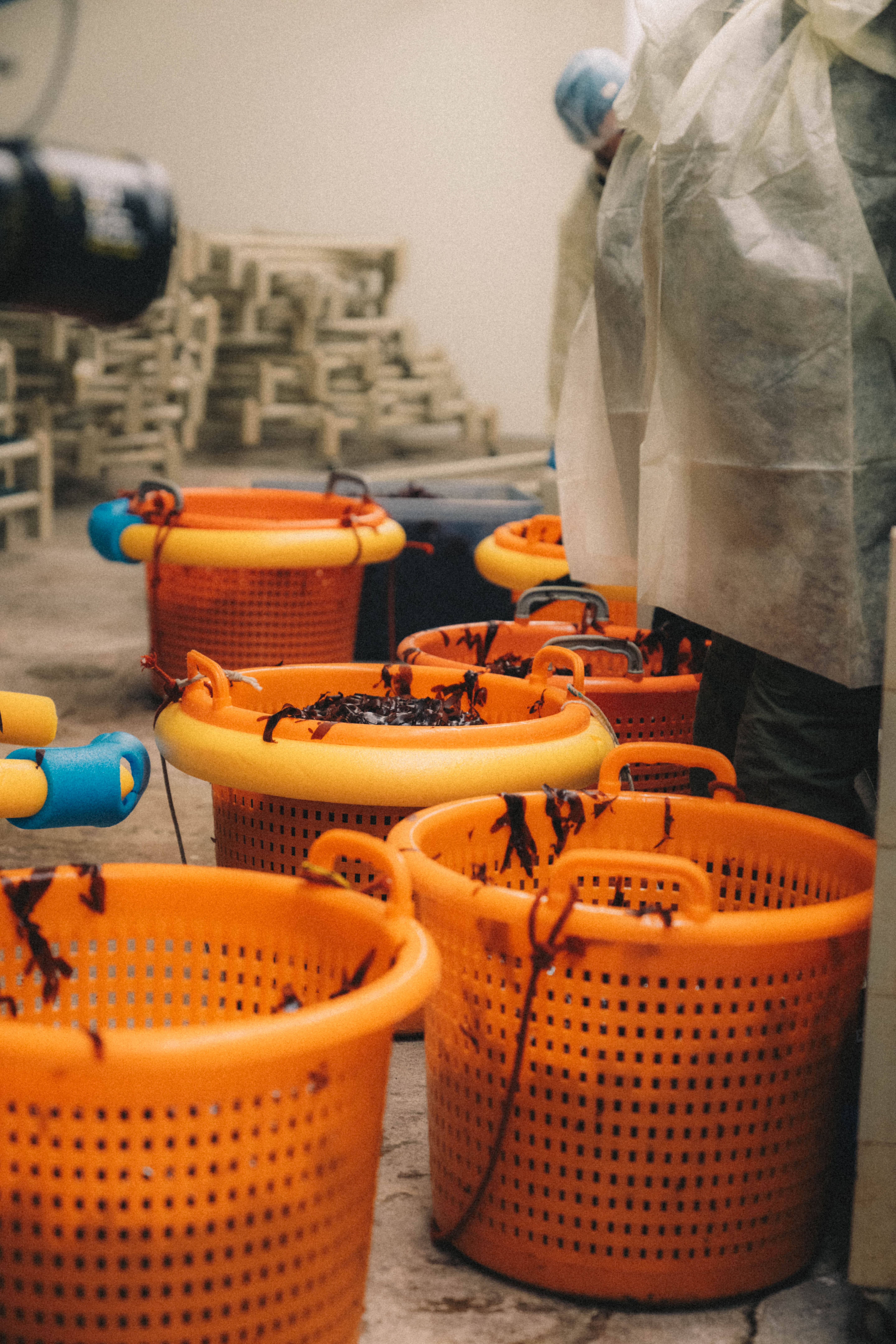
Norway and specifically the Lofoten Islands presented a unique convergence of production, logistical, and creative challenges that demanded meticulous planning and deep trust with our subjects—relationships we cultivated for up to a year before we ever started shooting.The remote Arctic archipelago required us to transport a hybrid production package into one of Norway's most weather-volatile environments. We coordinated a crew across multiple disciplines— a local underwater specialist in Inge Wegge in Lofoten—while aligning schedules with the unpredictable tidal harvest windows of Lofoten Seaweed. Real-time adaptability was crucial. One afternoon it the weather turned from sunshine to a blizzard and we got in the wetsuits and started shooting anyway. That was definitely my favorite day on production and a memory I will carry with me for the rest of my life.For Alaska, we worked differently: we brought in local creatives to execute while we produced from afar. The film is self-funded, so tapping into local communities wasn't just practical—it was essential to telling an authentic story and respecting the place.We spent months planning before the production window, learning the timing and seasonality of the specific seaweeds we'd follow in both Lofoten and Alaska. Then we waited. The circled date on the calendar finally arrived, we lucked into a mostly clear weather window, and we used every hour we'd blocked off for travel and production.Shooting vérité was the only way to stay flexible—in the action, in the water, in the tight drying rooms, around the subjects. We locked off for specific moments, but kept everything organic and handheld, so viewers feel like they're there with the harvesters, not watching a styled production. Our aim isn't to tell people about seaweed—it's to let them learn it alongside the subjects, moment by moment.
At the heart of the film is a return of traditional knowledge, a way of knowing these communities kept alive while the rest of the world was only beginning to wake to it. What tension did you find between that old memory and the recent fever around seaweed as superfood and business?
It's about balance—keeping alive something that's already been a cornerstone of global cultures while simultaneously stewarding a revival of the ocean itself.In certain areas of Lofoten, there was severe overfishing when Angelita was a child. For decades, the town slowed down, the fishing industry nearly disappeared. Lofoten Seaweed honors the local traditions and relationship with the ocean—living with it rather than just taking from it. They harvest sustainably, cutting above growth points so seaweed regenerates year over year. Now they're employing a workforce to harvest, process, and distribute globally. And something beautiful happened: there's a work revival in Lofoten. They're remodeling the old fishing factories—the same buildings that sat decaying after overfishing—turning them into production facilities, offices, vacation rentals, and soon interactive displays and education centers for visitors to enjoy.That's incredibly symbolic. The tradition survives and the community is restored. It's not one or the other. It's both.
There's a double fragility running through Intertidal: an ecosystem that shifts with every degree of warming, and communities whose knowledge survives only as long as someone is still there to pass it on. Did you come to see those two fragilities as separate threats, or as the same one? When a coastline changes, which tends to break first, the tide or the tradition?
They're not separate threats—they're the same threat, just happening at different speeds.If there's a major shift that disconnects a community from their ocean—overfishing, coral bleaching, rising temperatures, shifting seaweed cycles—those changes occur. But here's what gives me some hope: there's growing global awareness of these practices. Seaweed harvesting, fishing traditions, coastal knowledge systems—they're being recognized as foundational to culture, community, and heritage in ways they weren't before. We are seeing smart minds and passionate individuals around the world use technology, engineering, and community involvement to creativel solve as best as they can for a variety of these major shifts.Through education, knowledge-sharing, and direct experience, we can entrust these practices to future generations while teaching them to adapt. Nature adapts constantly. My hope is that there will always be people committed enough to stick around—to learn, teach, and pass these traditions forward even as the conditions change. The fragility is real, but so is the possibility of resilience if we actually invest in it. It all starts with educating in my opinion.
Seaweed is being talked about now as a market, a climate solution, an investment. As you filmed, did you find yourself worrying about who ultimately profits from this ocean plant, and whether the communities holding the knowledge will share in that value?
The film's primary aim is educational—to build understanding and appreciation for seaweed among people who've never encountered it and a secondary perspective to those who live near or on the water themselves. That said, I'm aware of the larger conversation around seaweed as a market, a climate solution, an investment opportunity. What matters to me is that the communities holding this knowledge—the harvesters, the families who've stewarded these practices—are centered in the story, not backgrounded by it. This film is their story first. If it helps create economic opportunity for them, that's aligned with our mission. If it attracts investment and commercial interest to these communities, that's not a problem as long as they're driving it, not being driven by it.
Intertidal is shot and locked, but the edit still needs the resources to come together. What does it feel like to be so close, and for a reader who connects with the film's spirit, how can they help carry it across the line?
It's really hard to be this close. Timing feels critical—Vogue just published a major piece on Lofoten Seaweed, and the cultural conversation around regenerative food systems is at a real inflection point. We have sincere interest from streaming platforms willing to offer this film to their subscribers. We are constantly emailing airlines to ask for their interest as "seat-back entertainment," and more. We also have had conversations with brands and non-profits about offering it on their own Youtube channel for streaming. That's our north star: free, open dissemination so anyone can see it. The immediate goal is to secure the funds needed to finish editing, and start submitting to film festivals around the globe. That could come from brands aligned with ocean sustainability, airlines, nonprofits, foundations, or individuals who connect with the film's spirit. There are multiple ways to carry this across the line. We're asking: who's ready to help?
Intertidal is finished shooting but still needs funding to complete the edit and reach festivals worldwide. To contribute or find out more, get in touch with Tyler Brower at tyler@ampersandstudios.co
Twice a month. A message from our hearts.
Sign up for updates on outdoors, adventure, climate and sustainability.

%20(1)-compressed.jpg)